
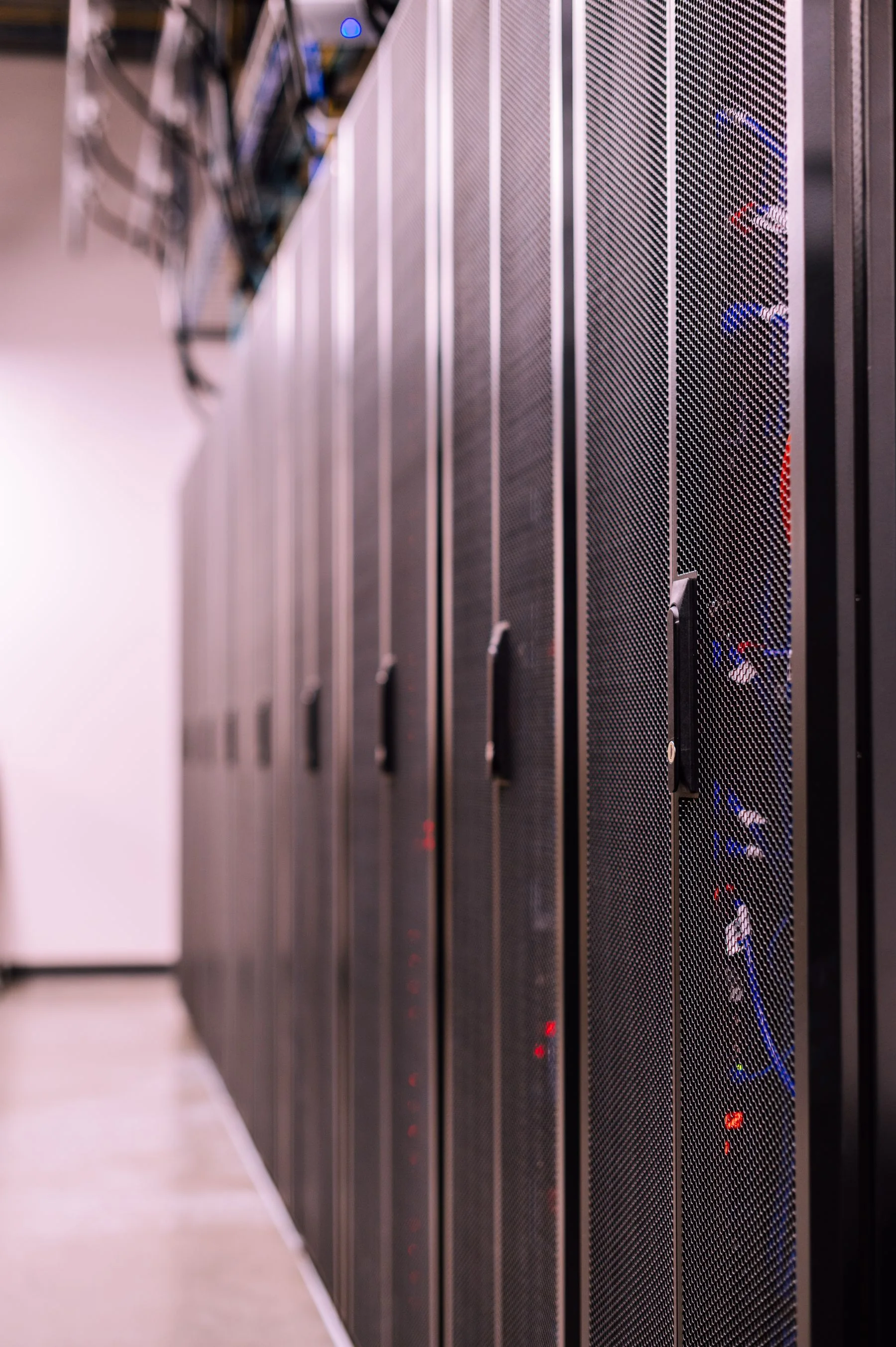
Enterprise IT infrastructure / data center hosting
Data center infrastructure
A stable, maintainable IT environment needs the site, network, compute and storage to work together. Yuqi Intelligent provides current-state assessment, capacity planning, equipment selection and supply, deployment, migration and acceptance handover for an operable, scalable infrastructure.
Every layer, from hosting conditions to business applications, needs a checkable boundary.
01 Why infrastructure matters
Make the conditions for hosting business stable first
Enterprise networking, compute, storage and applications do not run separately from space, power, cooling, ports and maintenance access. Stable infrastructure puts these conditions into a reviewable hosting diagram and leaves paths for migration, maintenance and growth.
Hosting conditions can be checked
Rack space, power distribution, cooling, network entry and equipment access must align before IT equipment has sustainable operating conditions.
Capacity can evolve
Record current hosting, ports, cabling and growth direction so future networking, compute or storage additions have an executable path.
Changes can be staged
Split migration, configuration changes and switching by dependency, moving to the next stage after monitoring and rollback conditions are clear.
02 How infrastructure hosts business
Site conditions → IT hosting → business layer
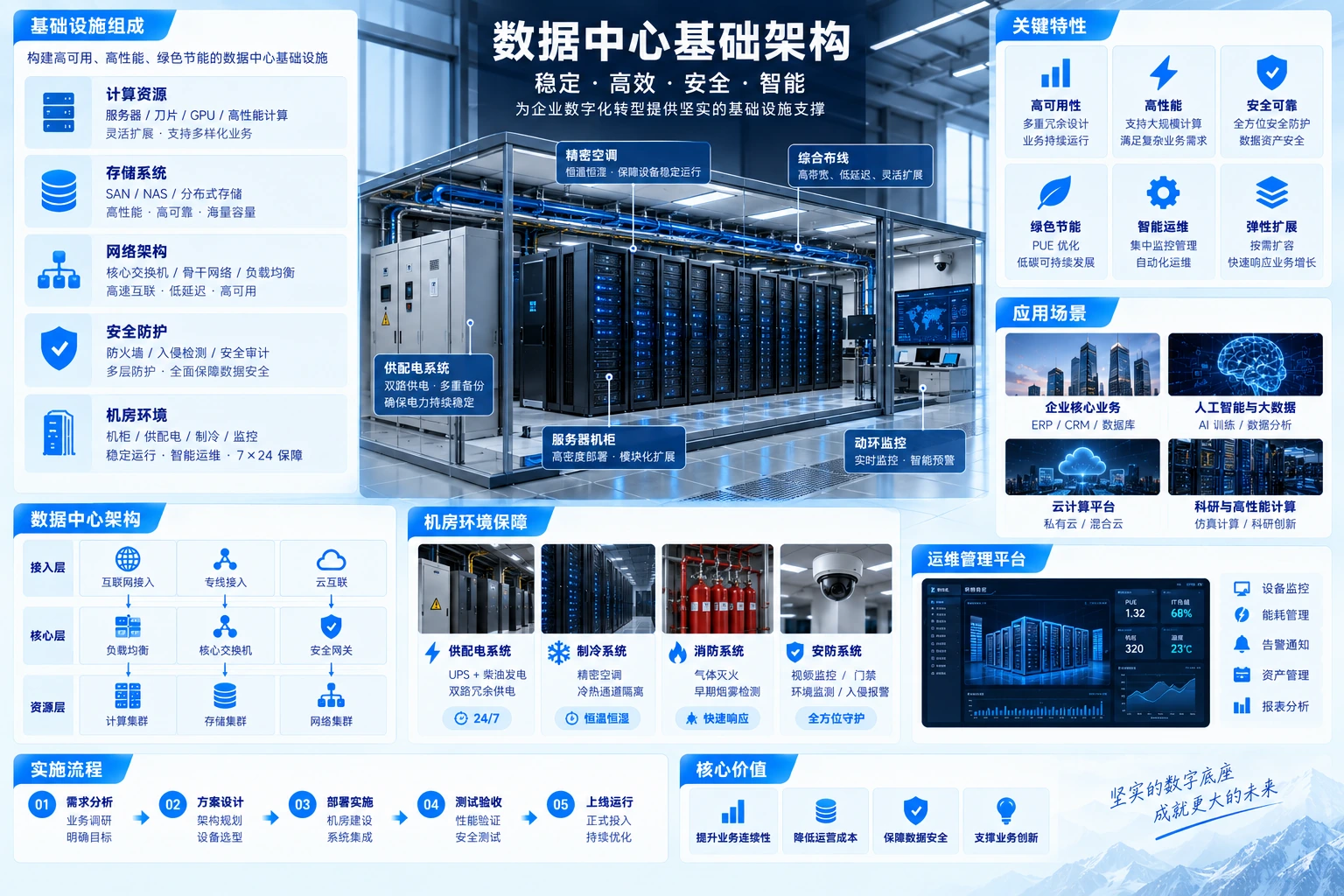
Racks, power and cooling provide operating conditions first; networking, compute and storage form IT hosting; applications, data and operations processes build on it. Security and monitoring span all three layers to observe boundaries, alerts and change results.
Site conditions connect to IT hosting and then to the business layer; security and monitoring span all three to observe the environment, equipment and application boundaries.
- Space and maintenance access
- Power, thermal and environmental boundaries
- Ports, capacity and uplinks
- Configuration, versions and migration dependencies
- Application paths and switching conditions
- Business validation and operating procedures
Keep the relationships separate: Solid lines show hosting handoffs; dashed lines show security and monitoring across layers. Each layer returns to site conditions, configuration and business testing for verification.
03 Implementation path
From conditions inventory to staged switching
Infrastructure work connects the site, equipment, configuration and business dependencies: inventory first, then plan and integrate, and finally switch and hand over against confirmed rollback conditions.
- 01
Site conditions
Rack position, power, cooling, grounding, access and maintenance space define the boundary for installation and long-term operation.
- 02
IT hosting
Networking, compute, storage, virtualization and management planes work together through defined ports, capacity and dependencies.
- 03
Business layer
Applications, data, access paths and operations processes consume IT capabilities; migration and switching return to real business validation.
04 What Yuqi Intelligent can deliver
Infrastructure implementation services from Yuqi Intelligent
Around hosting conditions, capacity planning, equipment and network, configuration migration and operations handover, Yuqi Intelligent separates the items that need joint review and advances them within project boundaries.
Site and capacity assessment
Review space, power, cooling, network entry, equipment generation and maintenance conditions to define hosting boundaries and open checks.
Capacity, rack and network planning
Map rack positions, ports, uplinks, cabling, power and future expansion relationships into a planning draft for joint review.
Equipment selection, quotation and supply
Discuss equipment or software forms around network, compute, storage and management needs, then support selection, quotation and supply.
Rack cabling and configuration migration
Coordinate rack installation, port and cabling checks, then stage configuration migration, integration testing and switch preparation by dependency.
Monitoring, alerts and acceptance handover
Complete integration, acceptance and handover around monitoring items, alert paths, test records, rollback conditions and maintenance material.
05 Client delivery
Hand the hosting relationship to operations
Delivery is more than equipment going live. The client also needs to know how to check capacity and racks, trace ports and cables, roll back configuration, handle alerts and plan growth. If hosting also involves enterprise system integration, servers and storage or storage virtualization, the documentation records the boundary and the next checking path.
- Data center hosting architecture, capacity and rack-position diagram
- Port, uplink, cabling and power-distribution checklist
- Equipment, software, configuration and version list
- Migration, staged switching, monitoring and alert integration report
- Operations manual for inspections, changes, rollback and fault handling
- Expansion recommendations and open checks based on site conditions
06 Ongoing operations
Make maintenance and growth traceable
After handover, configuration still needs maintenance, capacity must be watched, alerts followed up, ports and cabling planned, and changes and rollback scheduled. Recording these actions keeps infrastructure from depending on a few people’s site memory.
Use the actual site, selected equipment, business dependencies and tests confirmed by both parties as the implementation and acceptance basis.
Frequently asked questions
Clarify the implementation boundary first
What should data center infrastructure solve first?
First check site conditions and the IT hosting relationship, then add networking, compute, storage and applications. Space, power, cooling, ports, capacity and maintenance paths affect deployment and growth.
Can Yuqi Intelligent help with equipment selection and supply?
Yes. We discuss equipment or software forms around hosting conditions, network, compute, storage, interfaces, maintenance and growth, then support selection, quotation and supply. The scope follows site and project confirmation.
How are migration and switching risks controlled?
Inventory dependencies, configuration, ports and rollback conditions first, then integrate in stages by network, compute, storage or application boundary. Move to the next stage after agreed tests pass; business continuity must be validated in the application and cannot be guaranteed by infrastructure alone.
What documentation remains after delivery?
By project scope, this includes architecture and capacity/rack diagrams, port and cabling tables, configuration lists, test reports, monitoring and alert records, operating manuals and expansion recommendations.
Start a discussion
Start with your racks, network and hosting plan
Tell us about site conditions, existing equipment, capacity changes, migration and switching, and operations handover priorities so we can confirm the data center infrastructure boundary.