
Data center server colocation
Turn data-center server colocation into a service with clear boundaries
Organize server colocation around facility conditions, rack access, power, networking, operating ownership, maintenance windows and incident coordination, turning equipment placement into an observable, supportable service.

Racking is only the start.
Turn conditions, connectivity and ownership into a service that can keep running.01 / Colocation boundary
Colocation is more than a rack: each operating condition needs a clear boundary
The colocation boundary is defined by facilities, network and remote control. Confirming these layers gives equipment, ports and maintenance ownership a clear place.
Data-center facilities
Power, cooling, monitoring and fire or disaster protection form the operating foundation.
Network connection
Multi-carrier, BGP and China-direct connectivity need to be reviewed against user locations, traffic paths and bandwidth needs.
Remote operations
Remote control, incident handling, maintenance and expansion sit inside the confirmed scope and contact model.
02 / A service that can be delivered
From facility conditions to ongoing support, break colocation into four executable relationships.
The real decision is not whether a rack exists. It is who owns what after the equipment arrives, how it connects, how it is maintained and whether the next expansion still has a baseline.
01 / Service boundary
Separate what the facility provides from what the customer owns
Server colocation needs clear boundaries among equipment, racks, power, networking, operating systems, applications, backup and on-site support. Clear boundaries make it easier to identify facility, equipment or business-system issues.
The service model should turn service levels, on-site work, remote support, spares, approvals and escalation into rules both sides can execute.
- 01Facility scope
Confirm racks, space, power, cooling, fire protection and environmental conditions.
- 02Customer scope
Define responsibility for servers, systems, applications, data, backup and configuration.
- 03Coordination boundary
Agree tickets, approvals, room access, remote operations and escalation.

02 / Rack and access
After racking, ports, power and maintenance paths must map one to one
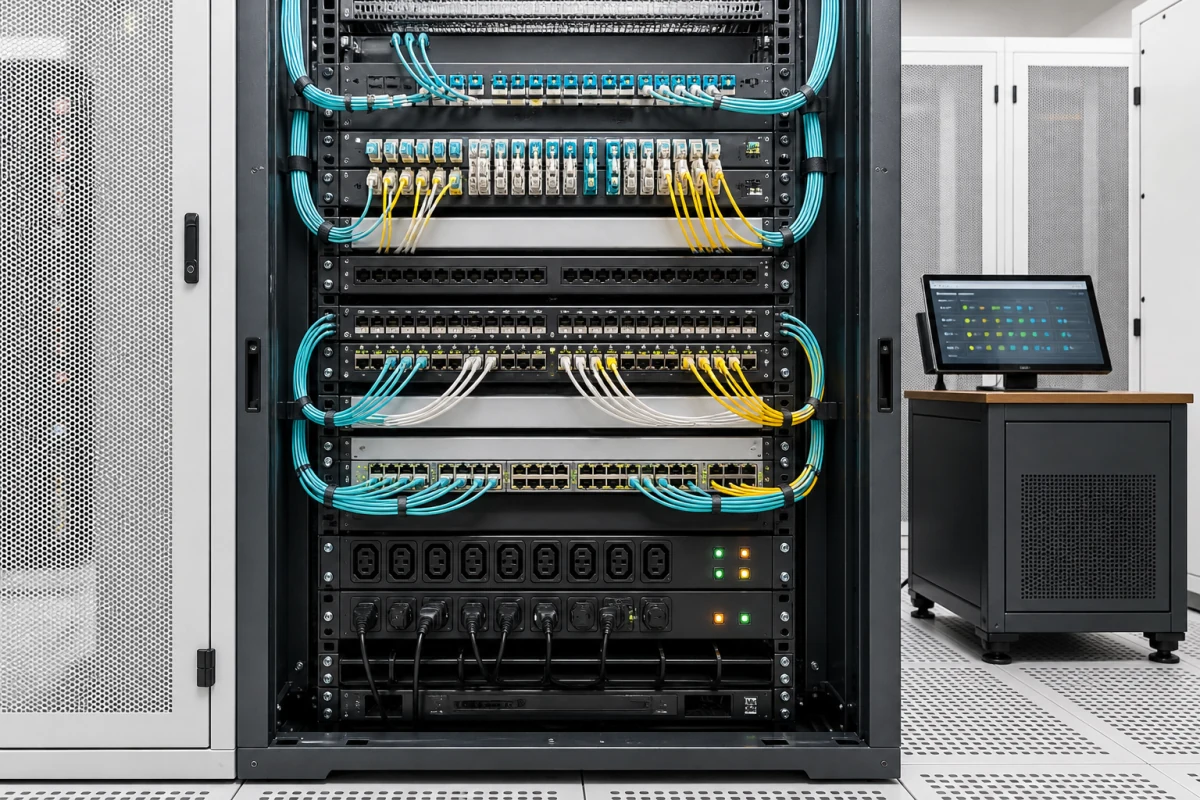
Colocation handover does not end when equipment enters a rack. Rack position, PDUs, network ports, addresses, remote management, labels and maintenance aisles must map to one another during installation and acceptance.
Every device should have a traceable path from asset ID to rack unit, power, ports and contact owner.
- 01Asset and position
Record model, serial, rack, U position, asset ID and photos.
- 02Ports and power
Confirm network ports, PDU outlets, redundant paths and remote-management access.
- 03Acceptance and records
Keep evidence for connectivity, equipment state, labels and maintenance windows.
03 / Daily operations
Colocation keeps equipment and facility conditions visible
The daily value of colocation comes from stable operation: equipment health, power, networking, temperature, humidity, alerts, spares and maintenance windows need defined observation and response.
Support should be organized around who detects, decides, acts and confirms instead of creating an ad hoc group after an incident.
- 01State observation
Watch equipment, ports, power, environment and alert changes.
- 02Changes and maintenance
Execute racking, removal, replacement, upgrades and on-site work within windows.
- 03Incident coordination
Record discovery, impact, ownership routing, handling, review and conclusion.

04 / Ongoing support
Move from colocation handover into sustainable business support
Colocation is not a one-time room rental; it continuously carries equipment conditions. As the business changes, capacity, networking, spares, maintenance, migration, backup and disaster recovery must remain coordinated.
Handover records should support the next expansion, migration or incident without rediscovering equipment and ownership.
- 01Capacity and expansion
Assess rack, power, ports, bandwidth and maintenance headroom in advance.
- 02Backup and recovery
Clarify how hosted equipment connects to backup, off-site recovery and restoration.
- 03Long-term records
Keep assets, configuration, tickets, contacts and service boundaries current.
02 / Decision boundary
Build or colocate: first decide where three responsibilities sit
Dedicated servers, data security and remote maintenance depend on more than equipment choice. Facility investment, network conditions and operating ownership also shape long-term cost and stability.
Ownership stays in-house
The organization carries racks, room, power, cooling and monitoring.
01 / In-house investmentCoordinate facilities and operations by boundary
Use data-center facilities while keeping the investment within a defined colocation scope.
02 / Colocation scopeOwnership stays in-house
Plan lines, exits, access rights and network redundancy in-house.
01 / In-house investmentCoordinate facilities and operations by boundary
Select connectivity around the data center’s lines, ports and multi-carrier network.
02 / Colocation scopeOwnership stays in-house
Organize people to handle checks, upgrades, incidents and disaster protection.
01 / In-house investmentCoordinate facilities and operations by boundary
Define remote control, maintenance windows, incident handling and contact ownership.
02 / Colocation scope03 / Operating path
From intake to stable colocation, every step leaves a handover record
Delivery covers equipment, the environment and operating ownership so that “racked” does not get confused with “delivered”.
Review
Confirm equipment, facility conditions, ports, access rights and maintenance windows.
Leave a handover-ready evidence chainConnect
Rack the equipment and establish network, system and remote-control access.
Leave a handover-ready evidence chainVerify
Check connectivity, access paths, operating status and incident contacts.
Leave a handover-ready evidence chainHandover
Record equipment, ports, configuration and maintenance information for steady operation.
Leave a handover-ready evidence chainDelivery result
The value of colocation is visible in sustainable operation and clear ownership
The scope, equipment records and operating boundary are confirmed against the actual environment. These are the records delivery should leave behind.
Review the colocation conditions when geography, bandwidth, equipment or access policy changes.
Use the delivered configuration and ownership boundary for maintenance, upgrades and expansion.
FAQ / Colocation questions
Answer the questions that shape a colocation decision.
01How is server colocation different from a cloud server?+
Colocation centers on a dedicated physical server, data-center facilities and remote operating ownership. Fit depends on requirements for independence, performance, access and maintenance.
02What should an organization prepare first?+
Start with equipment models and quantities, planned location, network and bandwidth needs, access method, maintenance windows and current issues.
03Can the server still be maintained remotely?+
Yes. Remote control is a common operating method, with access, maintenance windows and incident ownership confirmed in scope.
NEXT / COLOCATION REVIEW
Share the equipment, site conditions and operating goals. We will help confirm the boundary first.
Equipment models and quantities, planned location, network and bandwidth needs, access method, maintenance windows and current issues are enough to start the first conversation.